Cart is empty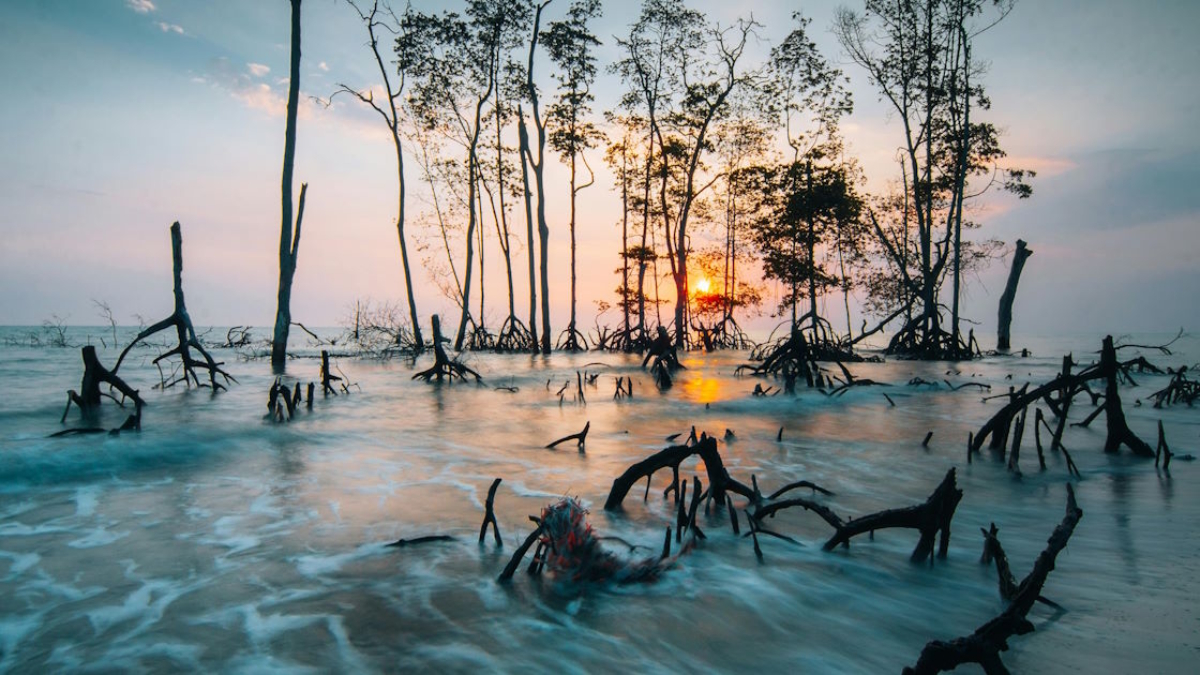
Aquarium keepers know mangroves are incredibly resilient, but one question comes up over and over. Can mangrove plants actually survive if they are completely submerged underwater?
At first glance, it seems possible.
After all, they live along coastlines where tides rise and fall every day. But in an aquarium, where water levels can stay high for long periods, the rules change.
This guide breaks down exactly how long mangroves can tolerate full submersion, what happens to their roots and leaves underwater, and how to prevent common mistakes that can permanently damage or kill them.
If you keep mangroves in freshwater, brackish, or saltwater, you need to understand this limit so your plants thrive instead of slowly declining.
Do Mangroves Survive When Fully Underwater?
Mangroves can survive short periods of full submersion, but they cannot live this way long term. Their biology is built around air exchange, and without access to oxygen, the plant becomes stressed very quickly.
In nature, tides go up and down, giving mangroves a cycle of underwater time followed by exposure to air.
Aquariums, on the other hand, tend to keep water levels constant.
The critical issue is oxygen. Mangroves breathe through lenticels, which are small pores located on their bark and roots.
When water covers these pores, gas exchange is blocked. The longer they stay submerged, the more the plant suffocates.
Most mangroves can survive being fully underwater for hours, sometimes up to a day, but not continuously for days or weeks.
Long term submersion almost always results in root rot, leaf yellowing, and eventual die off.
If you want to explore more ways mangroves benefit aquarium ecosystems, this guide breaks everything down Can You Grow Mangroves at Home?
Why Mangroves Need Their Leaves Above the Waterline
Keeping the leaves above the water is not optional. It is essential. Leaves handle photosynthesis, salinity regulation, and breathing. If they are underwater, the plant cannot exchange gases properly, which stops its ability to filter nutrients or grow.
Even if the leaves are just barely touching the water, the plant suffers. Leaves should always stay several inches above the surface for proper air flow and light penetration.
Mangrove Fact
🌱 Mangroves evolved to survive tidal flooding, but never full-time submersion. Their root systems are adapted to wet conditions, but their leaves and bark rely on exposed air to function. This is why mangroves in nature colonize shorelines, not deep water.
How Long Can Mangroves Stay Fully Underwater?
There is no exact universal time limit, but most mangroves begin experiencing stress symptoms within a few hours. Around eight to twelve hours, you will see the earliest signs of oxygen deprivation.
By twenty-four hours of full submergence, root tissues begin to break down.
The deeper the water and the lower the oxygen levels, the faster this decline happens. In highly aerated tanks, mangroves may last a little longer underwater, but the end result is still the same.
Submersion cuts off their ability to breathe.
Curious How Mangroves Would Look In Your Aquarium?
➡️ Check out our live mangrove plants to see which will look best in your Freshwater, Saltwater, or Brackish setup.
What Happens to Mangroves When They Stay Underwater Too Long?
When mangroves are submerged for extended periods, several problems begin to stack up.
Early Symptoms
- Slowed growth
- Leaf tips turning pale
- Reduced salt export on leaf surfaces
- Roots becoming soft instead of firm
Moderate Symptoms
- Leaf yellowing
- Bark darkening
- Small branches drying out or dropping
Severe Symptoms
- Root rot
- Complete leaf drop
- Stem collapse
- Permanent plant death
Once a mangrove loses all its leaves, it rarely recovers.
Can Mangroves Filter Water While Submerged?
Mangroves continue absorbing nitrates and other nutrients through their roots even if underwater, but only for a short period. Their filtration ability drops sharply once oxygen becomes limited. Without a way to respire, the plant cannot maintain its nutrient cycling system.
A healthy mangrove with leaves above the waterline filters far more efficiently than one that is stressed or fully submerged.
If you want a deep dive into how mangroves naturally remove nitrates, check out this helpful breakdown Can Mangroves Remove Nitrates in Freshwater Aquariums?
Are There Any Times Mangroves Should Be Underwater?
Short-term submersion is sometimes beneficial. If you are rinsing roots, adjusting tank layout, or temporarily lowering water level for maintenance, the plant will be fine for a few hours.
Just make sure the leaves are returned above the surface as soon as possible.
Some aquarists temporarily submerge mangroves to encourage root wrapping around driftwood or rock. This is okay, but only for short intervals and only if the plant has a recovery period afterward.
Can Mangroves Grow With Only Their Roots Submerged?
This is the ideal setup. The roots belong underwater. The leaves belong above the waterline. When this arrangement is correct, mangroves grow fast, thrive in a wide range of salinities, and provide natural filtration.
Benefits of keeping roots submerged but leaves above:
Root Benefits
- Access to dissolved nutrients
- Natural support against floating
- Bacteria colonization similar to traditional filter media
Leaf Benefits
- Continuous gas exchange
- Stronger growth and branching
- Better nitrate processing
Your tank will always perform better with this setup.
If you want to see substrate options that work best for root anchoring, explore this article Can Mangroves Grow Without Substrate?
Common Myths About Submerged Mangroves
Myth 1: Mangroves grow underwater in nature
They grow in tidal zones, not underwater zones. They get flooded for a short time, but always emerge again.
Myth 2: Mangroves grow faster when fully submerged
The opposite is true. Growth slows dramatically.
Myth 3: Mangroves can adapt to long-term submersion
Adaptation does not occur. Their biology requires air.
Good vs Bad Setups for Aquarium Mangroves
Good Setups
- ✅ Leaves above the waterline
- ✅ Roots submerged in clean, oxygenated water
- ✅ Strong lighting with 8 to 12 hours daily
- ✅ Stable tank with low nitrate spikes
- ✅ Mangroves anchored but not buried
Bad Setups
- ❌ Leaves touching the water
- ❌ Mangroves fully submerged for long periods
- ❌ Low lighting or inconsistent light schedules
- ❌ No aeration around the roots
- ❌ Crowding mangroves too close together
Final Thoughts
Mangroves are hardy, but they are not underwater plants. They are shoreline trees designed to breathe air and handle brief tidal flooding. In an aquarium, keeping the leaves above the waterline is the number one rule if you want them to stay healthy, grow tall, and provide powerful natural filtration.
Looking To Upgrade Your Tank With Natural Filtration?
➡️ Check out our live mangrove plants for sale and get yours shipped directly to your home.